

Launching a new e-commerce business is thrilling — and terrifying. You’ve built the site, sourced your products, and set your prices. Now comes the real question: How do you get your first customers — and keep them coming back? This guide walks through realistic, field-tested strategies to attract your first buyers, earn trust, and create repeat customers who become your most powerful advocates.
Core Insights
Getting first-time e-commerce customers isn’t about flashy ads — it’s about trust, clarity, and repeatable signals of value. Focus on:
- Visibility through authentic storytelling and consistent branding
- Easy discovery (SEO, marketplaces, social proofs)
- Friction-free checkout and strong post-buy communication
- Reward systems and community-driven retention loops
1. Start With Clarity, Not Complexity
Before you run ads or launch campaigns, make sure your store makes sense to a total stranger in ten seconds. Early customers don’t give second chances. If they can’t instantly tell what you sell and why it matters, they’re gone.
Keep these three clarity anchors front and center:
- Product Clarity: Each item should have one crystal-clear advantage statement. Skip the jargon; describe how it makes life easier or better.
- Brand Story: People remember why, not what. Share your origin briefly — one or two sentences that reveal your purpose or spark trust.
- Offer Stack: Bundle products or highlight a simple incentive (like free shipping or a small gift). A clear offer converts curiosity into action.
2. First-Customer Attraction Tactics (The Fast Lane)
Your first wave of sales comes from proactive outreach — not waiting for traffic.
- Partner with micro-influencers who have trust, not just followers.
- Join community forums or subreddits in your niche; answer real questions (soft linking later).
- Offer exclusive early-bird or founder discounts via Mailchimp.
- List your products on discovery platforms like Etsy or Faire for visibility.
- Launch referral programs using tools like ReferralCandy.
Quick-Start Checklist: Turning Visitors Into Customers
- Your product descriptions include benefits, not just features.
- You’ve installed a review widget or testimonial carousel.
- Checkout flow takes under 3 clicks from cart to confirmation.
- You collect emails before checkout (exit intent popups work).
- You’ve tested all mobile display sizes.
- Your thank-you email includes a small future discount.
3. Building Loyalty (The Long Game)
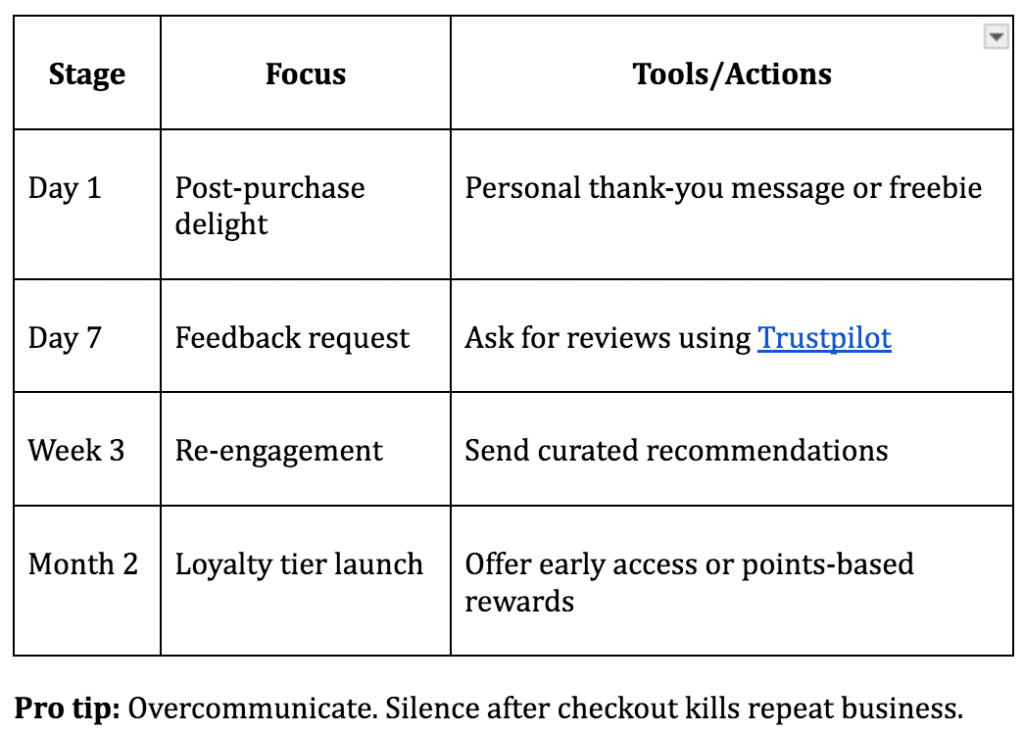
Customer retention starts at the moment of purchase, not months later. Here’s a quick rhythm to build loyalty loops:
4. Create a Seamless Setup with a Business Platform
One of the easiest ways to launch a polished, professional online store is with an all-in-one platform. Use services like Shopify to simplify the setup process. It simplifies the setup process. You can create your website, design your logo, and add an e-commerce cart in one dashboard. This approach reduces technical friction. It allows you to focus on storytelling and product photography. You can concentrate on your first traffic sources, not code or plug-in conflicts.
5. Featured Product Highlight: Squarespace
If you’re looking for strong visual design templates, Squarespace excels with creative-friendly themes. It also offers built-in SEO tools. Unlike marketplaces, it gives you control over branding and layout — perfect for lifestyle and boutique shops. Pair this with a loyalty program via Smile.io to keep customers engaged beyond their first purchase.
Glossary
Conversion Rate: Percentage of visitors who make a purchase.
LTV (Lifetime Value): Total revenue a customer generates over their relationship with your brand.
UGC (User-Generated Content): Photos, reviews, or posts created by your customers.
AOV (Average Order Value): Average spend per transaction.
Retention Loop: A repeatable system that keeps customers engaged and returning.
CTA (Call to Action): The button or prompt driving a user to take action.
FAQs
Q1: Should I start with ads or organic marketing?
A: Start organic — it builds credibility. Use paid ads only after you’ve tested messaging.
Q2: How do I compete with huge marketplaces?
A: By being specific. Niche products, personal service, and transparency win.
Q3: When should I introduce loyalty programs?
A: Once you’ve hit at least 50 repeat customers — that’s your base for expansion.
Q4: What’s a simple free analytics tool?
A: Google Analytics or Hotjar for behavior tracking.
Building a lasting e-commerce brand starts with clarity, consistency, and genuine connection. The first sale is proof of concept — the next hundred prove your staying power. Every message, email, and follow-up shapes how customers remember you. Keep delivering value, and your buyers will turn into advocates who grow your business for you.
Guest Writer:
Check out our Entrepreneurship swag on Redbubble here:

 Entrepreneur Uncovered